

Generating quality leads consistently remains one of the hardest challenges marketing professionals face in 2026. Most agencies struggle with disconnected tools, misaligned sales teams, and campaigns that deliver volume without value. The result? Wasted budgets and frustrated stakeholders. This guide walks you through a proven, AI-driven lead generation process that maximizes both quality and efficiency. You'll learn how to prepare strategically, execute multi-channel campaigns with precision, and verify results using data-driven optimization. Whether you're scaling an agency or refining your marketing stack, this framework delivers actionable insights to transform how you capture and convert leads.
Table of Contents
- Understanding The Lead Generation Challenge
- Preparing To Optimize Your Lead Generation Process
- Executing An AI-Driven, Multi-Channel Lead Generation Campaign
- Verifying And Optimizing Your Lead Generation Results
- Enhance Your Lead Generation With Hukt AI
- Frequently Asked Questions About Lead Generation Process
Key takeaways
| Point | Details |
|---|---|
| AI automation boosts efficiency | AI-driven workflows improve lead scoring accuracy by 35-50% and triple response rates compared to manual processes. |
| Multi-channel coordination wins | Omnichannel campaigns prevent data silos and bidding conflicts, maximizing lead capture across touchpoints. |
| Quality beats volume every time | Data-driven lead scoring and sales alignment prevent the trap of chasing unconvertible leads. |
| Hybrid strategies optimize ROI | Combining inbound content with targeted outbound outreach balances cost efficiency and conversion rates. |
Understanding the lead generation challenge
Marketing professionals today face a brutal reality: generating leads is easier than ever, but generating qualified leads that actually convert is harder than it's ever been. The explosion of digital channels and automation tools has created a paradox. Agencies can flood their CRM with contacts, yet poor sales-marketing alignment causes 79% of leads to be unconvertible. That's not a technology problem. It's a strategic one.
The core issue stems from several interconnected challenges. First, many teams prioritize volume over quality because vanity metrics look good in reports. Second, trust barriers have skyrocketed as buyers become more sophisticated and skeptical of generic outreach. Third, data lives in silos across platforms, making it nearly impossible to understand the true customer journey. When your paid ads team doesn't talk to your content team, and neither coordinates with sales, you're burning budget on redundant efforts.
Over-automation compounds these problems. Tools promise to "set it and forget it," but without a coherent strategy, automated campaigns become spam factories. Complex B2B buying processes require multi-threaded outreach and niche positioning, not blasted email sequences. Here's what agencies consistently struggle with:
- Balancing lead quantity with genuine qualification criteria
- Breaking down departmental silos that fragment customer data
- Maintaining personalization at scale without sacrificing authenticity
- Navigating longer sales cycles with multiple decision makers
- Measuring true ROI beyond surface-level engagement metrics
These challenges aren't insurmountable, but they demand a structured approach. You need clarity on who you're targeting, how you'll reach them, and what success actually looks like. The agencies winning in 2026 treat lead generation as a science, not a guessing game. They leverage marketing strategies for brand managers that integrate AI-driven insights with human creativity to cut through the noise.
Preparing to optimize your lead generation process
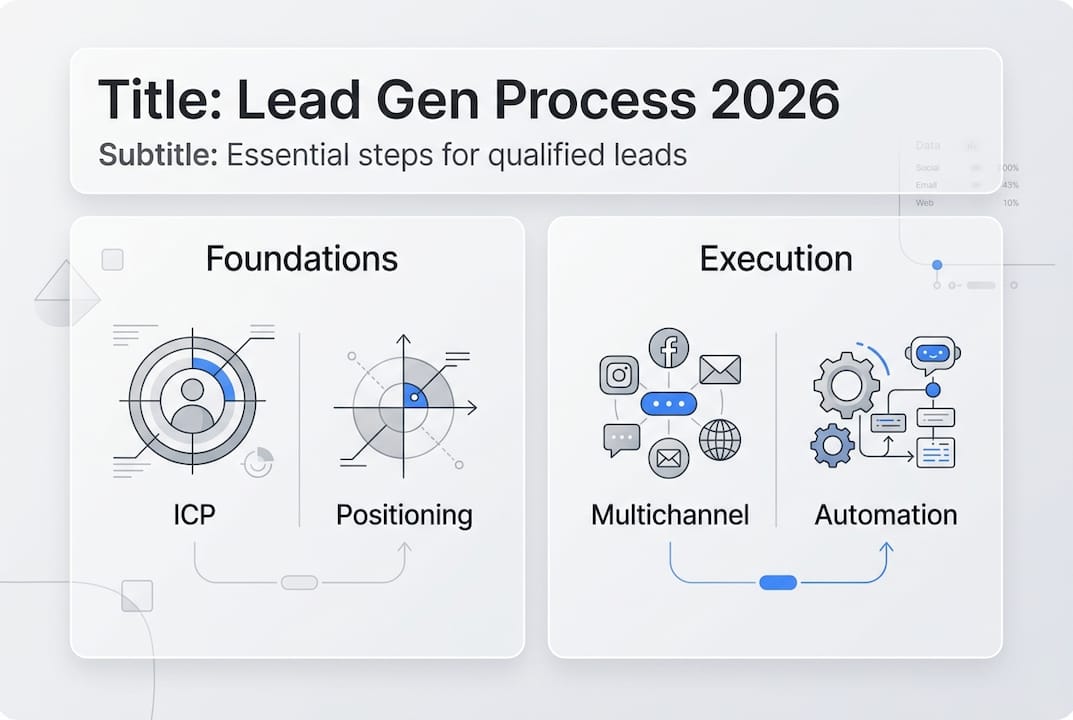
Before you launch a single campaign, you need a rock-solid foundation. The lead generation process typically follows a structured framework starting with defining ICP and positioning. Without this groundwork, even the most sophisticated automation will fail. Start by defining your Ideal Customer Profile with surgical precision. Go beyond basic demographics. What specific pain points keep your best customers awake at night? What triggers prompt them to seek solutions? What objections consistently arise during sales conversations?
Your unique positioning must answer one question clearly: why should someone choose you over every alternative, including doing nothing? Vague value propositions kill conversions. Be specific about the outcomes you deliver and the audiences you serve best. Once your ICP and positioning are locked, create lead magnets that directly address high-priority problems your prospects face.
Here's a comparison of effective lead magnet types:
| Lead Magnet Type | Primary Benefit | Best Use Case | | --- | --- | | Industry Reports | Establishes authority with original data | Top-of-funnel awareness for new audiences | | Templates/Tools | Delivers immediate practical value | Mid-funnel engagement with active researchers | | Webinars | Builds personal connection and trust | Bottom-funnel for high-consideration purchases | | Case Studies | Proves ROI with real customer outcomes | Late-stage prospects evaluating vendors |
Your landing pages must be ruthlessly optimized for conversion. Remove navigation distractions, use clear benefit-driven headlines, and keep forms as short as possible while still capturing qualification data. Every field you add reduces conversion rates, so only ask for information you'll actually use. Test different layouts, copy angles, and calls-to-action continuously.
Essential prerequisites for high-converting lead capture include:
- Clear value proposition visible above the fold
- Social proof elements like testimonials or client logos
- Mobile-optimized design with fast load times
- Thank-you pages that set expectations for next steps
- Automated confirmation emails that deliver promised assets immediately
Pro Tip: Validate your ICP assumptions before investing heavily in campaigns. Use intent data platforms and customer surveys to confirm that your target audience actually experiences the problems you solve and actively seeks solutions. This prevents expensive misfires and ensures your messaging resonates from day one.
Integrate your preparation with broader AI marketing guide for marketers principles to leverage machine learning for audience segmentation. Consider how your lead capture strategy fits within a multi-platform marketing guide framework to ensure consistency across channels.
Executing an AI-driven, multi-channel lead generation campaign
Execution separates theory from results. The most effective campaigns in 2026 coordinate multiple channels without creating internal competition or data fragmentation. Omnichannel coordination means your SEO content, paid ads, email sequences, and social outreach all reinforce each other rather than operating in isolation. When prospects see consistent messaging across touchpoints, trust builds faster and conversion rates climb.

AI-driven automation enhances lead gen with 3-5x response rates and 35-50% improved lead scoring accuracy. These aren't marginal gains. They represent fundamental improvements in how efficiently you identify and nurture high-potential prospects. AI excels at pattern recognition, analyzing thousands of data points to predict which leads will convert and which will waste your sales team's time.
Here's how different channels typically perform:
| Channel | Typical CPL Range | MQL-to-SQL Conversion | Best For | | --- | --- | --- | | Organic SEO | $30-$80 | 18-25% | Long-term sustainable pipeline | | LinkedIn Ads | $75-$150 | 12-18% | B2B decision-maker targeting | | Email Outreach | $20-$60 | 8-15% | Personalized direct engagement | | Google Ads | $50-$120 | 10-20% | High-intent search capture |
Implementing AI automation workflows requires strategic thinking, not just tool adoption. Start with lead capture: use intelligent forms that adapt based on visitor behavior and source. Someone arriving from a high-intent search query should see different questions than a casual social media visitor. Next, deploy predictive lead scoring that weighs behavioral signals like content consumption, email engagement, and website activity against firmographic fit.
Your nurture sequences should leverage AI for personalization at scale. Here's a proven implementation approach:
- Segment leads by behavior patterns and firmographic characteristics using machine learning clustering.
- Create dynamic content blocks that adapt messaging based on industry, role, and engagement history.
- Deploy chatbots for instant qualification and routing of high-intent prospects to sales immediately.
- Use predictive analytics to identify optimal send times and channel preferences for each contact.
- Continuously retrain models based on conversion outcomes to improve accuracy over time.
Pro Tip: Monitor your data dashboards daily during the first two weeks of any new campaign. AI models improve with feedback, but they need human oversight to catch edge cases and refine parameters. Set alerts for unusual patterns like sudden drops in conversion rates or spikes in unsubscribes.
Integrate your execution with proven AI ad campaign strategy tactics to maximize paid channel performance. Leverage machine learning marketing ROI boost techniques to optimize budget allocation across channels dynamically based on real-time performance data.
Verifying and optimizing your lead generation results
Execution without verification is just expensive guessing. The agencies that consistently outperform competitors obsess over full-funnel metrics, not vanity numbers. Tracking cost per lead means nothing if those leads never close. You need visibility from initial contact through closed revenue, with clear attribution at every stage. Agencies see 65% more qualified opportunities with data-driven tactics and AI can lift ROI 10-20%. Those gains come from relentless optimization based on actual conversion data.
Sales and marketing alignment isn't a nice-to-have anymore. It's the difference between profitable growth and wasted budgets. Establish a formal Service Level Agreement between teams that defines what constitutes a Marketing Qualified Lead and how quickly sales must follow up. Create feedback loops where sales reports back on lead quality weekly, not quarterly. When 79% of leads fail to convert due to misalignment, fixing this gap delivers immediate ROI improvements.
Here are the critical KPIs to monitor:
| Metric | What It Measures | Target Benchmark |
|---|---|---|
| Cost Per Lead | Efficiency of lead acquisition | Varies by channel, track trends |
| MQL Rate | % of leads meeting qualification criteria | 25-40% of total leads |
| SQL Rate | % of MQLs accepted by sales | 50-70% of MQLs |
| Opportunity Rate | % of SQLs becoming real opportunities | 30-50% of SQLs |
| Close Rate | % of opportunities becoming customers | 20-35% of opportunities |
| Sales Cycle Length | Time from MQL to closed deal | Track to identify bottlenecks |
Common optimization tactics that drive measurable improvements include:
- A/B testing landing page headlines, form lengths, and calls-to-action continuously
- Implementing sales feedback loops to refine lead scoring models monthly
- Calibrating lead scoring thresholds based on actual conversion rates by segment
- Analyzing drop-off points in nurture sequences to identify content gaps
- Testing different channel combinations to find optimal budget allocation
Pro Tip: Schedule a cross-departmental review every two weeks during campaign launches, then monthly once performance stabilizes. Bring sales, marketing, and operations together to review conversion metrics, discuss feedback, and align on optimization priorities. This cadence keeps everyone accountable and prevents small issues from becoming expensive problems.
Apply scalable marketing cost effective growth principles to ensure your optimization efforts focus on sustainable improvements rather than short-term hacks. Build systems that compound results over time through continuous learning and refinement.
Enhance your lead generation with Hukt AI
Transforming your lead generation process from manual chaos to AI-driven precision doesn't require a complete platform overhaul. Hukt AI consolidates the tools marketing professionals need to execute sophisticated multi-channel campaigns without platform switching or technical complexity. Generate personalized ad copy, social content, and campaign concepts in minutes using AI-powered creative tools designed specifically for marketing teams.
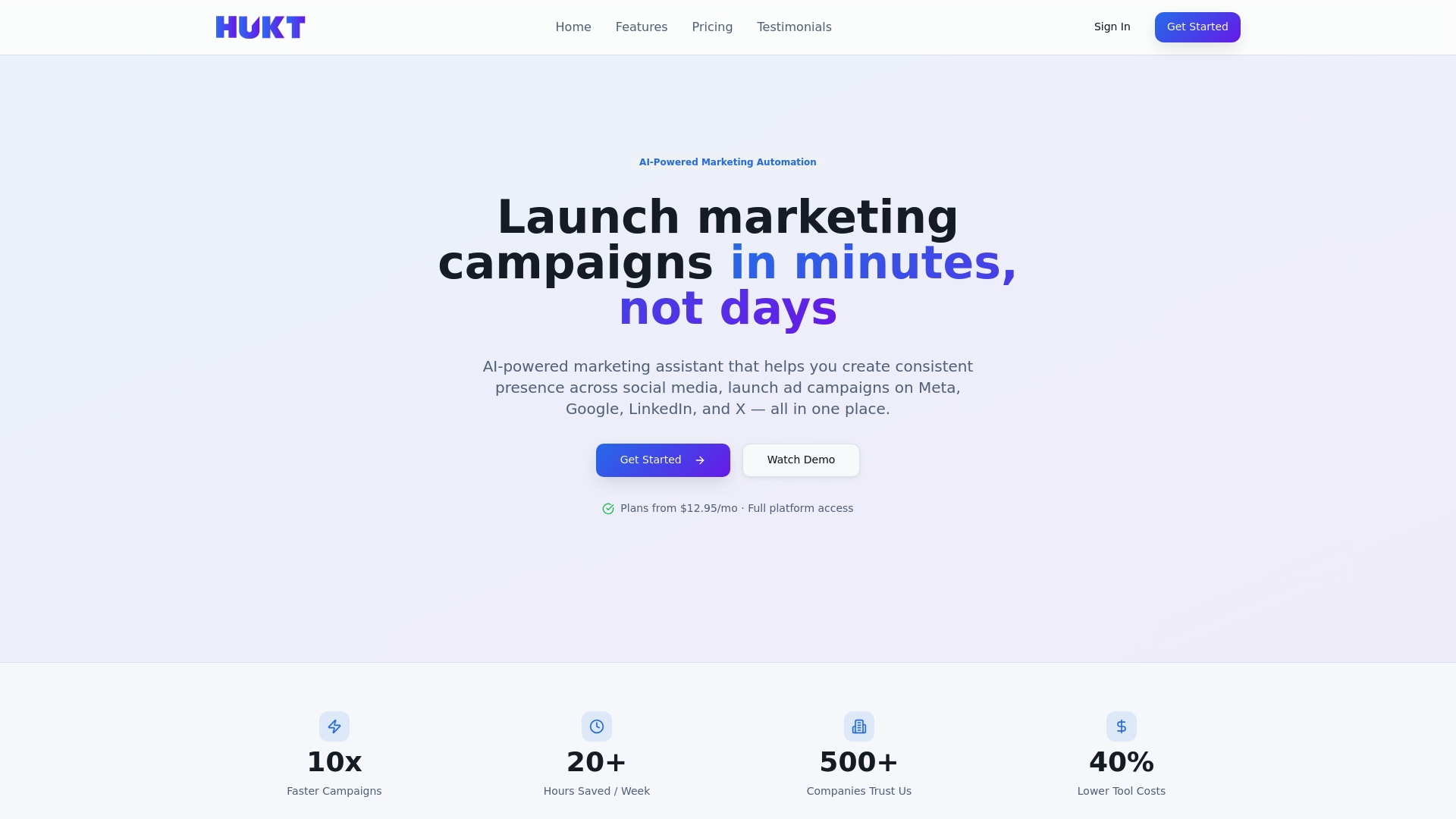
Launch coordinated campaigns across Meta, Google, LinkedIn, and X simultaneously while maintaining consistent messaging and tracking performance in unified dashboards. Real-time analytics help you identify winning combinations and optimize budget allocation on the fly. Whether you're a solo marketer or managing an agency team, Hukt AI's tiered plans scale with your needs. Explore how Hukt AI marketing automation software can accelerate your campaigns, reduce operational costs, and deliver measurable improvements in lead quality and conversion rates.
Frequently asked questions about lead generation process
What is the most effective channel mix for B2B lead generation?
The optimal mix depends on your ICP and buying cycle, but most successful B2B strategies combine organic content for long-term pipeline building with targeted paid channels for immediate demand capture. LinkedIn excels for decision-maker targeting, while Google Ads captures high-intent searches. Email remains critical for nurturing and relationship building. Test different allocations and let conversion data guide your budget distribution.
How does AI improve lead scoring accuracy?
AI analyzes hundreds of behavioral and firmographic signals simultaneously to identify patterns humans miss. Machine learning models continuously learn from conversion outcomes, refining predictions over time. This results in 35-50% better accuracy compared to manual scoring rules. AI also adapts to changing market conditions automatically, whereas static scoring models become outdated quickly.
What common mistakes reduce lead quality?
Prioritizing volume over qualification criteria tops the list. Other frequent errors include using generic messaging that fails to address specific pain points, neglecting sales feedback when refining targeting, and over-automating without human oversight. Many teams also fail to define clear ICP parameters, resulting in campaigns that attract the wrong audiences entirely.
How can agencies better align sales and marketing?
Establish formal SLAs that define lead qualification criteria and follow-up expectations explicitly. Create weekly feedback sessions where sales reports on lead quality and marketing shares campaign insights. Implement shared dashboards that track full-funnel metrics both teams care about. Most importantly, tie compensation and goals to revenue outcomes, not departmental vanity metrics.
Should I prioritize inbound or outbound lead gen in 2026?
The best approach combines both strategically. Inbound content builds long-term authority and attracts organic interest cost-effectively, but takes time to scale. Outbound provides immediate pipeline control and works well for targeting specific accounts. Successful agencies use inbound to establish credibility and nurture broad audiences while deploying targeted outbound for high-value prospects and account-based marketing initiatives.