

Many marketers struggle to define AI marketing beyond basic automation. Is it chatbots? Programmatic ads? Something more? In 2026, AI marketing has evolved into intelligent systems that reason, adapt, and make autonomous decisions to optimize campaigns. This shift transforms how you plan, execute, and measure marketing performance. Understanding what AI marketing truly means today is essential for staying competitive and leveraging tools that deliver measurable results.
Table of Contents
- Understanding AI Marketing: From Automation To Agentic Systems
- Current Trends And Statistics In AI Marketing Adoption And Impact
- How AI Marketing Improves Campaign Efficiency And Content Generation
- Best Practices To Scale AI Marketing Responsibly And Measure ROI
- Explore AI Marketing Automation With Hukt AI
Key takeaways
| Point | Details | |-------|---------|| | AI adoption jumped to 91% | AI adoption in marketing reached 91% in 2026, up from 63% in 2025, showing rapid industry transformation. | | Agentic AI enables autonomous decisions | Unlike traditional automation, agentic systems reason through complex scenarios and optimize campaigns without manual intervention. | | Content scaling is the top priority | Scaling high-quality content is the fastest growing AI priority, increasing 2.4x year over year. | | Governance challenges tripled | Cross-functional reviews and governance processes became primary barriers, up 3.4x year over year. | | Proving ROI remains difficult | Only 41% of marketers can confidently demonstrate AI's return on investment despite widespread adoption. |
Understanding AI marketing: From automation to agentic systems
AI marketing has evolved far beyond simple automation. Traditional marketing automation follows pre-set rules: if a user clicks an email, send another email. That's reactive. Agentic AI thinks differently.
Agentic systems in MarTech can adapt, reason, and make autonomous decisions, unlike traditional stacks that excel at automation. These systems analyze multiple data points simultaneously, consider contextual factors like audience behavior patterns and market conditions, then optimize campaigns in real time. Instead of waiting for you to configure every rule, agentic AI learns what works and adjusts strategies independently.
This distinction matters because it changes your role. You're no longer micromanaging every campaign detail. Instead, you focus on strategic governance, setting guardrails, and measuring outcomes while AI handles execution and optimization.
Here's what sets agentic AI apart:
- Learns from campaign performance without explicit programming
- Reasons through complex multi-channel scenarios
- Makes autonomous optimization decisions based on real-time data
- Adapts to changing audience behaviors and market dynamics
Platforms offering multi-platform marketing automation exemplify this shift. They don't just schedule posts or send emails. They analyze performance across Meta, Google, LinkedIn, and X simultaneously, then reallocate budget and creative resources to maximize ROI without constant human input.
Agentic AI transforms marketers from campaign executors into strategic orchestrators who define success metrics and let intelligent systems handle the complex optimization work.
The result? Faster campaign iterations, better personalization at scale, and marketing teams freed to focus on creative strategy rather than tactical execution.
Current trends and statistics in AI marketing adoption and impact
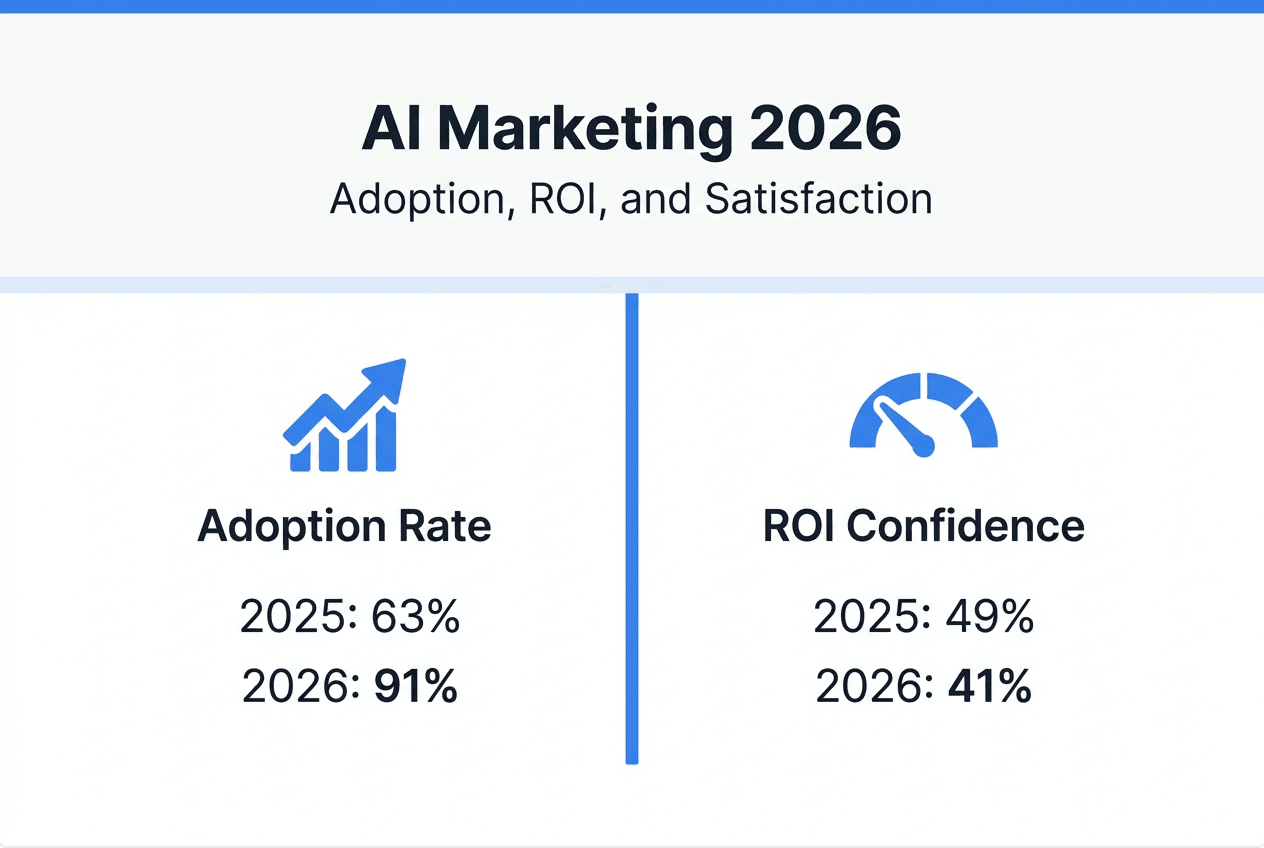
AI marketing adoption exploded in 2026. AI usage rose to 91% of marketers, compared to just 63% the previous year. This massive jump signals AI has moved from experimental to essential. But adoption alone doesn't tell the full story.
Marketing priorities shifted dramatically. Content scaling became the top priority, growing 2.4 times faster than any other AI application. Teams recognize they need to produce more personalized content across more channels while maintaining quality. Manual processes can't keep pace.
Yet challenges emerged just as quickly. Governance issues surged, with cross-functional reviews becoming a primary bottleneck. The same research shows these barriers increased 3.4 times year over year as organizations struggled to implement approval processes that match AI's speed.
Here's a snapshot of AI marketing's current state:
| Metric | 2026 Figure | Change from 2025 |
|---|---|---|
| AI adoption rate | 91% | +28 percentage points |
| Content scaling priority | Top concern | +2.4x growth |
| Marketers proving ROI | 41% | -8 percentage points |
| Job satisfaction increase | 75% | Steady improvement |
The ROI measurement gap is particularly telling. Only 41% can confidently prove AI ROI, down from 49% previously. This doesn't mean AI performs worse. Rising expectations and more sophisticated applications make measurement harder.
On the positive side, 75% of marketers report AI increased their job satisfaction. By automating repetitive tasks, AI lets teams focus on creative and strategic work. Exploring top marketing apps 2026 reveals tools designed specifically to enhance both efficiency and job quality.
The data paints a clear picture: AI marketing has reached critical mass, but organizational readiness lags behind technological capability. Teams that master governance and measurement will pull ahead.
How AI marketing improves campaign efficiency and content generation
AI marketing agents automate and execute marketing tasks using data, rules, and algorithms, learning and adapting over time. This capability transforms three core marketing functions: campaign execution speed, content personalization, and performance analytics depth.
Campaign launches that once took weeks now happen in days or hours. AI agents handle platform setup across multiple channels simultaneously, generate initial creative variations, and configure targeting parameters based on historical performance data. You review and approve rather than build from scratch.
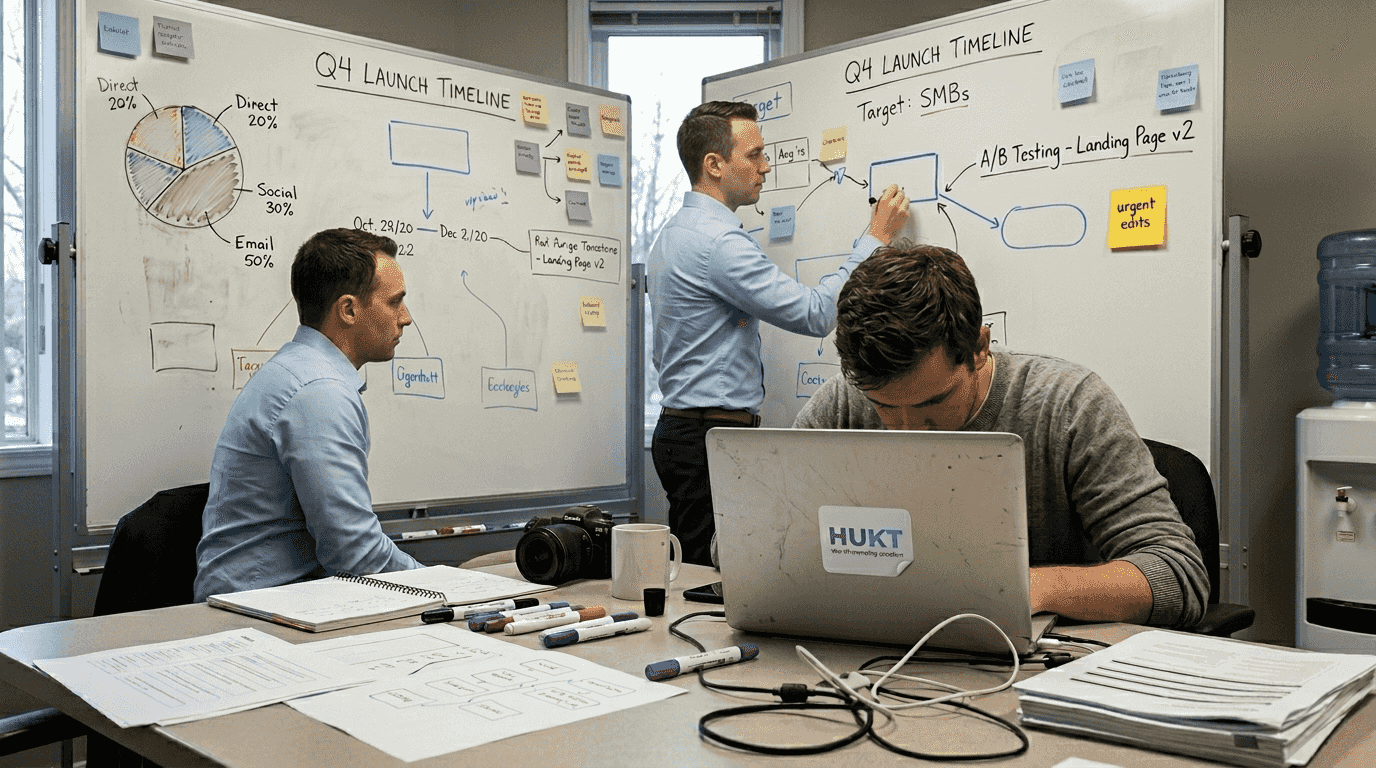
Content generation scales exponentially. AI analyzes audience segments, identifies messaging gaps, and produces personalized ad copy, social posts, and email sequences tailored to each segment. Quality improves because AI tests variations continuously, learning which language resonates with specific audiences.
Performance analytics become predictive rather than reactive. Instead of reviewing last week's results, AI forecasts campaign outcomes based on early signals, flags underperforming elements before budget waste occurs, and recommends optimizations backed by pattern recognition across thousands of previous campaigns.
Key efficiency gains include:
- Reduced time from strategy to execution by 60% or more
- Personalized content creation for dozens of audience segments simultaneously
- Real-time budget reallocation across channels based on performance
- Automated A/B testing that iterates faster than manual processes
Marketing teams shift from tactical executors to strategic governors. You define brand guidelines, set performance thresholds, and approve AI recommendations. The system handles repetitive optimization work.
Pro Tip: Integrate AI tools that connect across your entire marketing stack. Siloed AI in just email or just social limits impact. Platforms managing marketing strategies for brand managers across channels deliver compounding efficiency gains as each system learns from the others.
The transformation extends beyond speed. AI enables marketing sophistication previously available only to enterprises with massive teams. Small agencies and solo marketers now access enterprise-grade personalization, analytics, and optimization capabilities.
This democratization levels the playing field. Success depends less on team size and more on how effectively you leverage AI to amplify your strategic thinking.
Best practices to scale AI marketing responsibly and measure ROI
Governance and cross-functional review processes are now the primary barriers to scaling, up 3.4x year over year. The solution isn't rejecting AI but implementing disciplined frameworks that match its pace.
Follow these steps to implement effective AI marketing governance:
- Define clear ownership roles for AI-generated content, with specific approval authority at each level from junior marketers to executive leadership.
- Establish brand guidelines that AI systems can reference automatically, including tone, prohibited claims, and visual standards that reduce manual review cycles.
- Create streamlined approval workflows with time-bound review periods, defaulting to approval if no feedback arrives within 24-48 hours to prevent bottlenecks.
- Implement automated quality checks that flag potential issues like off-brand language or compliance risks before human review, catching 80% of problems instantly.
- Schedule regular cross-functional calibration sessions where marketing, legal, and product teams align on AI output standards rather than reviewing individual assets.
The gap between teams that scale AI successfully and those that struggle comes down to process discipline. Here's how approaches differ:
| Inefficient AI Scaling | Best Practice Approach |
|---|---|
| Every AI output requires manual approval from multiple stakeholders | Automated quality checks handle routine compliance, humans review strategy |
| No clear guidelines for AI systems to follow | Documented brand standards feed directly into AI training |
| Review cycles take 5-7 days per campaign | Time-bound approvals default to green light within 48 hours |
| Teams work in isolation until launch | Regular calibration prevents last-minute changes |
| AI treated as experimental side project | AI integrated into core campaign workflows |
Measuring ROI remains challenging. Only 41% can confidently prove AI ROI, down from 49% last year, reflecting rising expectations rather than weaker performance. The problem isn't AI underperforming but measurement frameworks lagging behind AI's sophistication.
Pro Tip: Track time savings separately from performance improvements. Calculate hours your team previously spent on tasks AI now handles, multiply by hourly cost, and add performance lift from better optimization. This comprehensive view captures AI's full value, not just campaign metrics.
A maturity gap is forming. Organizations that master governance and measurement accelerate while others struggle with basic adoption. Your competitive advantage depends on treating AI marketing as a core competency requiring investment in process, training, and measurement infrastructure.
Exploring resources on marketing efficiency 2026 to maximize ROI provides frameworks for building measurement systems that keep pace with AI capabilities.
Explore AI marketing automation with Hukt AI
Scaling AI marketing while maintaining governance and proving ROI requires platforms built for modern agentic systems. Hukt AI consolidates campaign creation, multi-channel execution, and performance analytics into a single AI-driven platform designed specifically for marketing professionals seeking efficiency without sacrificing control.
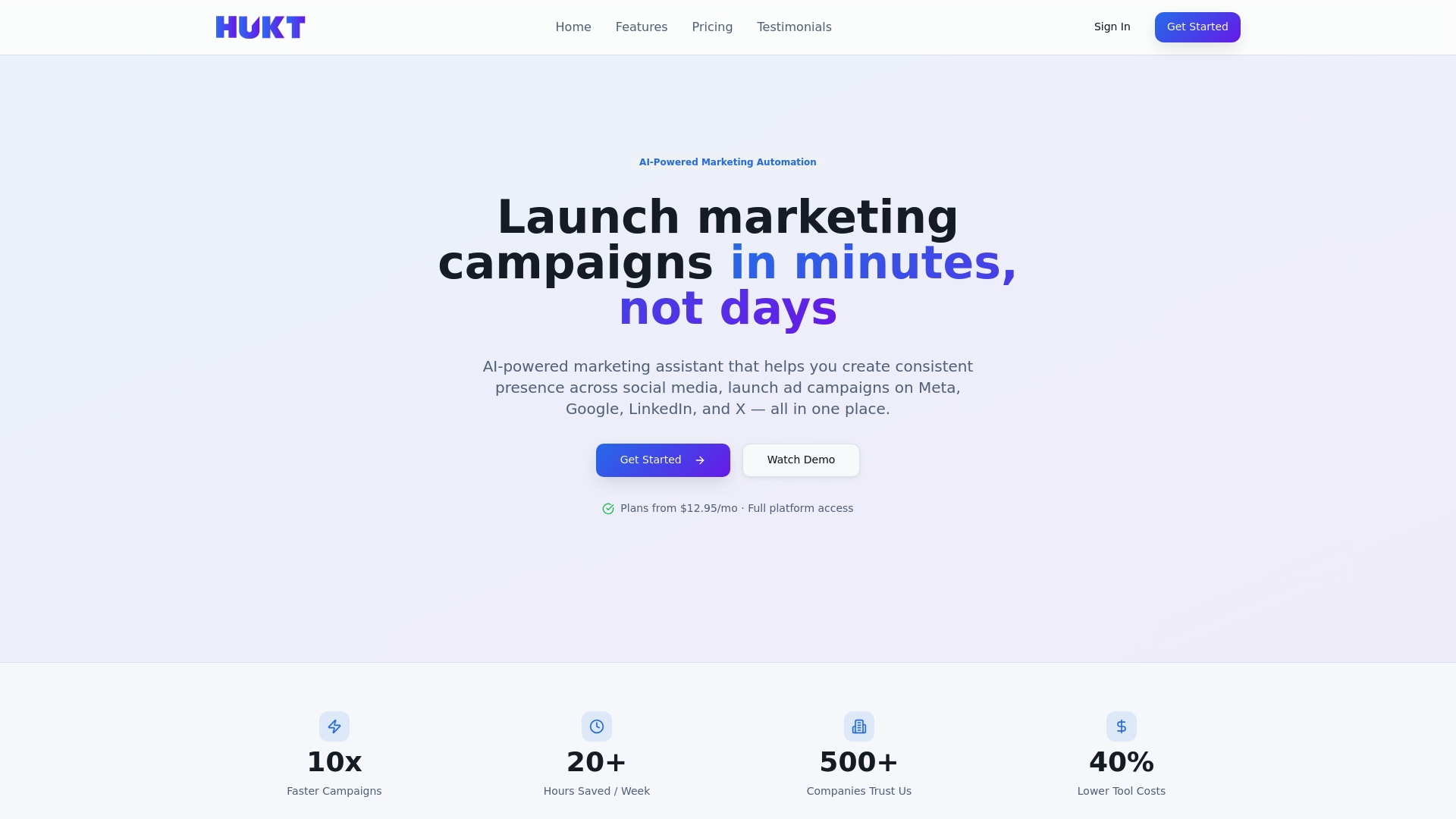
The platform addresses the core challenges discussed throughout this guide. Generate ad copy, social content, and campaign concepts using AI that learns your brand voice. Launch campaigns across Meta, Google, LinkedIn, and X simultaneously without platform switching. Monitor real-time performance through unified dashboards that surface optimization opportunities automatically.
Built-in governance features let you set approval workflows matching your team structure. AI handles creative generation and initial optimization while you maintain strategic control. This balance between automation and oversight helps teams scale content production without the 3.4x governance bottleneck affecting many organizations.
Whether you're an individual marketer managing multiple campaigns or an agency serving diverse clients, Hukt AI platform provides scalable solutions through tiered subscription plans. Explore how AI marketing automation can reduce your campaign launch times, lower operational costs, and improve effectiveness through intelligent insights.
FAQ
What is agentic AI in marketing?
Agentic AI uses reasoning to make marketing decisions and execute tasks without manual intervention at each step. Unlike traditional automation that follows pre-set rules, agentic systems analyze contextual factors, learn from outcomes, and adapt strategies independently. This enables continuous optimization that matches market dynamics faster than humanly possible.
How does AI help scale content creation?
AI tools analyze audience data to create relevant, personalized content faster than manual methods by generating multiple variations simultaneously. Scaling content is a top AI marketing priority with 2.4x year-over-year growth because teams need more personalized messaging across expanding channel portfolios. AI maintains consistency while adapting tone and format for each platform and segment.
What are the main challenges in AI marketing adoption?
Governance processes and cross-department collaboration have become primary scaling obstacles, increasing 3.4x as bottlenecks in 2026. Organizations struggle to implement approval workflows that match AI's speed without sacrificing quality control. Additionally, only 41% of marketers can confidently prove AI delivers expected ROI, reflecting measurement challenges rather than performance issues.
How can marketing teams measure AI ROI effectively?
Set clear KPIs aligned with campaign goals before AI implementation, ensuring you can isolate AI's contribution from other factors. Use data-driven dashboards to monitor AI-driven performance continuously, tracking both efficiency gains like time savings and outcome improvements like conversion rate lifts. Collaborate across teams to validate results comprehensively and build frameworks capturing AI's full value beyond surface-level campaign metrics. Resources on marketing efficiency to maximize ROI provide detailed measurement approaches.